All about the Pied Tamarin...
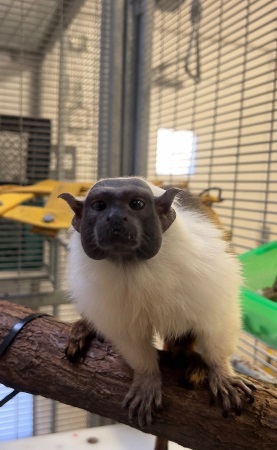
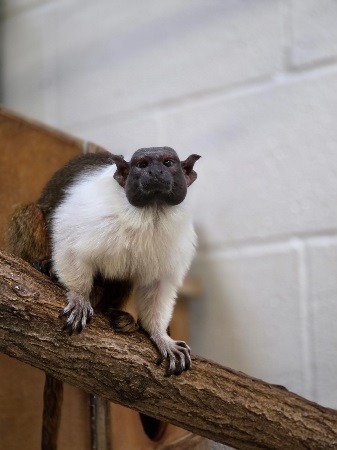
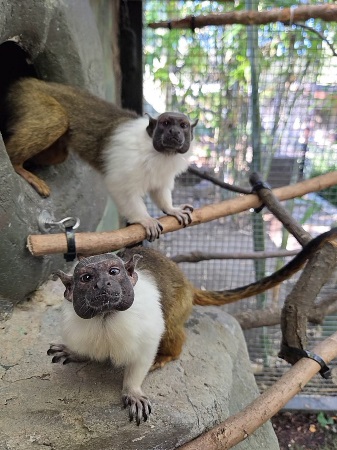
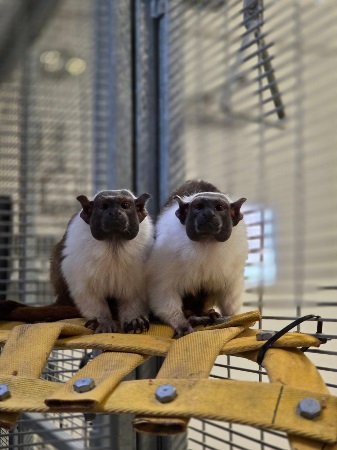
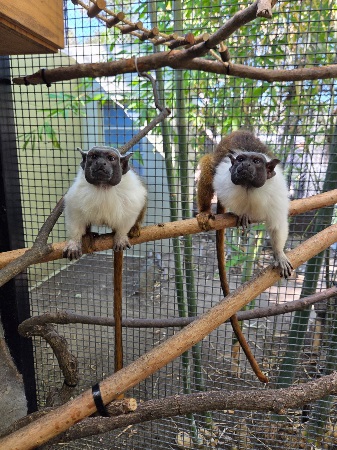
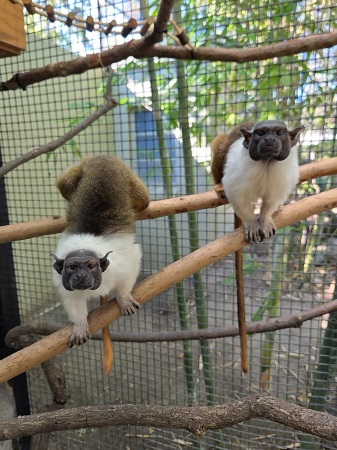
Pied tamarins are small-sized primates that are white in the cranial half of their body with a bald black head and hands/feet that are also black. The posterior half of their body is rusty brown in coloration. Males and females are similar in size and appearance (monomorphic). Pied Tamarins have long tails that help them balance when they climb into the upper reaches of tree canopies. They are usually less than a foot in size and weigh about 500g. Like other primates, they are active during the day (diurnal). Their predators include snakes, rats, and wild cats. Man, of course, is the greatest threat to these tiny primates.
Diet
Pied tamarins are omnivorous; feeding on fruits, flowers, tree gum, nectar, eggs, insects, small invertebrates, small reptiles, and bird eggs. During the dry season when sugary saps/gums are less available, the Pied tamarins shift their focus to hunting small animals.
Habitat
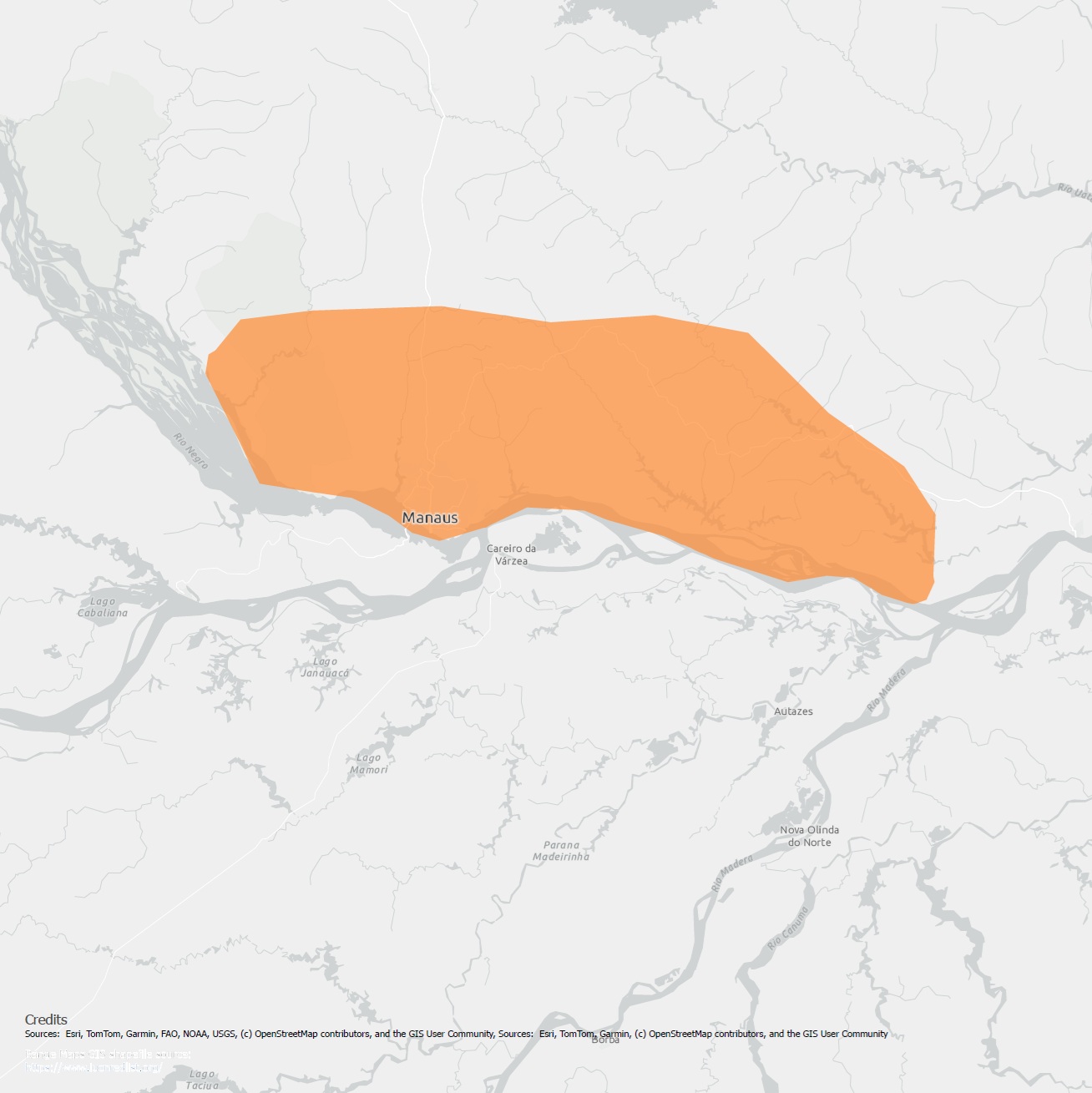
Pied tamarins live in rainforests, typically lowland rainforest including old-growth forests as well as secondary forests and swamp edges. Their habitat is next to the city of Manaus in Brazil which is rapidly growing causing deforestation which causes habitat fragmentation. The Pied tamarin is often forced to survive in degraded patches of forest and into the city. This introduces a set of problems the tamarins have not evolved to deal with. Pied tamarins have on of the smallest geographic ranges of any primate species.
Behavior
Pied tamarins are diurnal and spend their days in the trees foraging for their preferred foods and socializing. As with most animals with tails, Pied tamarins have a long tail that helps them keep their balance as they travel through the tree canopy. They have strong back legs allowing them to make leaps in gaps between trees. Pied tamarins typically remain in the tree canopy, rarely going to the ground. They use their sharp claws to process fruits and to dig through bark to access the sugary saps/gums that lie underneath. They have larger canines than most primates of their size allowing them to hunt prey that is a bit larger than other species such as frogs, lizards, large insects, an so on.
Pied tamarins are territorial and do not appreciate other species entering their space. However, Pied tamarins tend to be less adaptable and prone to stress.
Reproduction
Pied tamarin social groups usually consist of one adult breeding pair. The dominant female will release a pheromone that suppresses other female group members estrus leaving the dominant female as the only breeder. The dominant females estrus can occur anytime during the year lasting around 15 days. Gestation is usually 185-190 days. Twins are typically born with all their fur including fur on their heads which they will lose as they mature.
When the twins are born, they are completely helpless. They cling to their parents as most primate infants do. The father and other members of the group carry the infants on their back for the majority of the time. They give the infants to the mother every couple of hours so she can nurse them. By one month, infants may begin to take pre-chewed food from their parents. At two months they are more independent and not carried as much. By five months they are usually fully weaned and able to feed themselves though they may continue to have some assistance from the group. Females are mature at 18 months while it takes the males a full two years to mature.
Young tamarins are trained by their parents to display natural species-specific behaviors such as hunting, keeping watch for predators and alerting the family, and most importantly foraging for food resources. They are also trained to be good parents and are often allowed to take care of their younger siblings. Since a greater proportion of their behavioral repertoire is gained through learning, young tamarins must receive such training from their parents in order to survive, breed, and successfully take care of their young.
Status In The Wild
Pied tamarins are critically endangered. They have a very small range that boarders the rainforest city of Manaus. As the city expands, more and more of the Pied tamarin's habitat is converted from rainforest to city. They are outcompeted by Golden-handed tamarins restricting their ability to expand their range. As a result, they try to make their life in and around the city which results in electrocutions, predation by pet cats, vehicle strikes and so on. Pied tamarins typically live around 10 years in the rainforest. In managed care, Pied tamarins tend to live longer, often reaching 15-19 years of age.