All about the coppery titi...

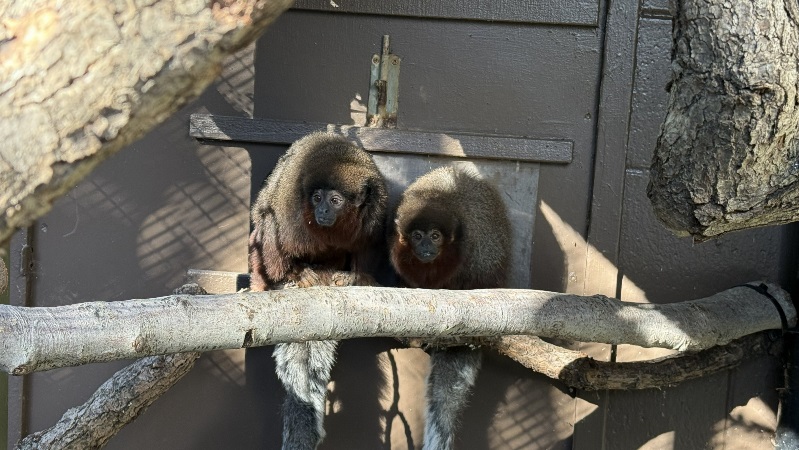
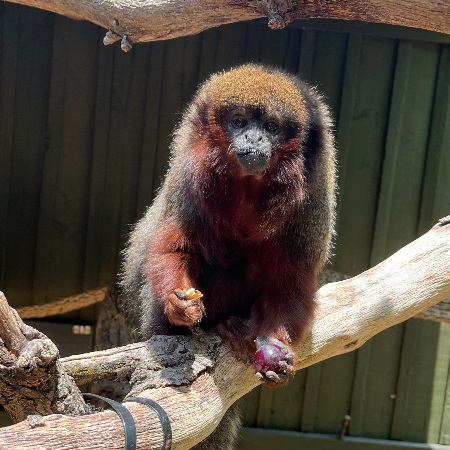
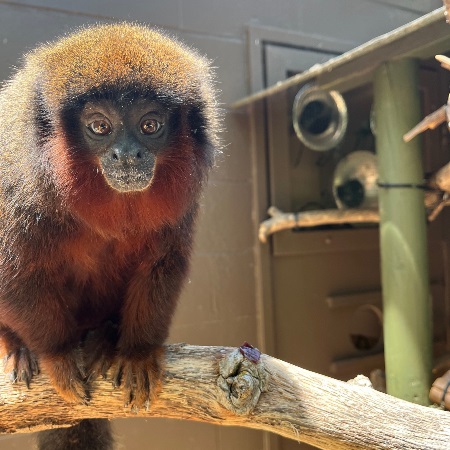
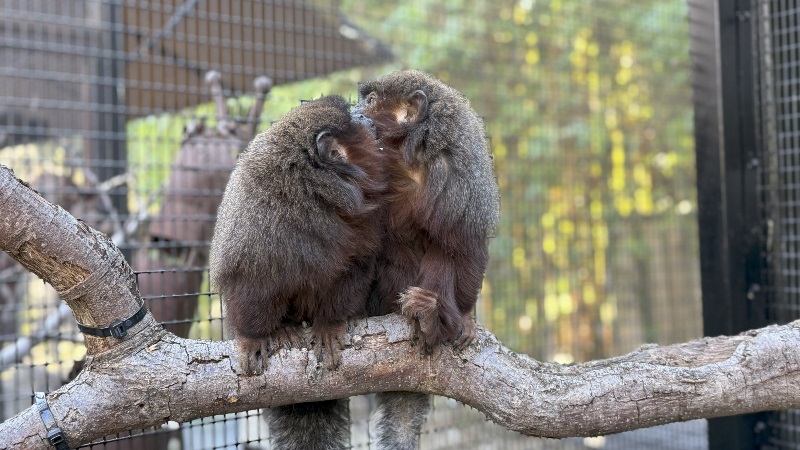
Coppery Titis have a thick coat of reddish-brown fur covering their bodies with the exception of their faces. Their coloring acts as camouflage- helping them hide from predators. Equipped with long tails, strong feet, and sharp claws, the Coppery Titi is well adapted to life in the trees making them an arboreal species. The tail helps with balance when the titi climbs trees and as a rudder when it jumps from tree to tree. Titis also use their tail as a flag to communicate social signals, often entwining it with tails of family members with whom they are socially bonded. Males and females are similar in size and are about a foot long with tails that are 14-25 inches long. They weigh around two pounds. Coppery Titis are diurnal, which means they are active during the day.
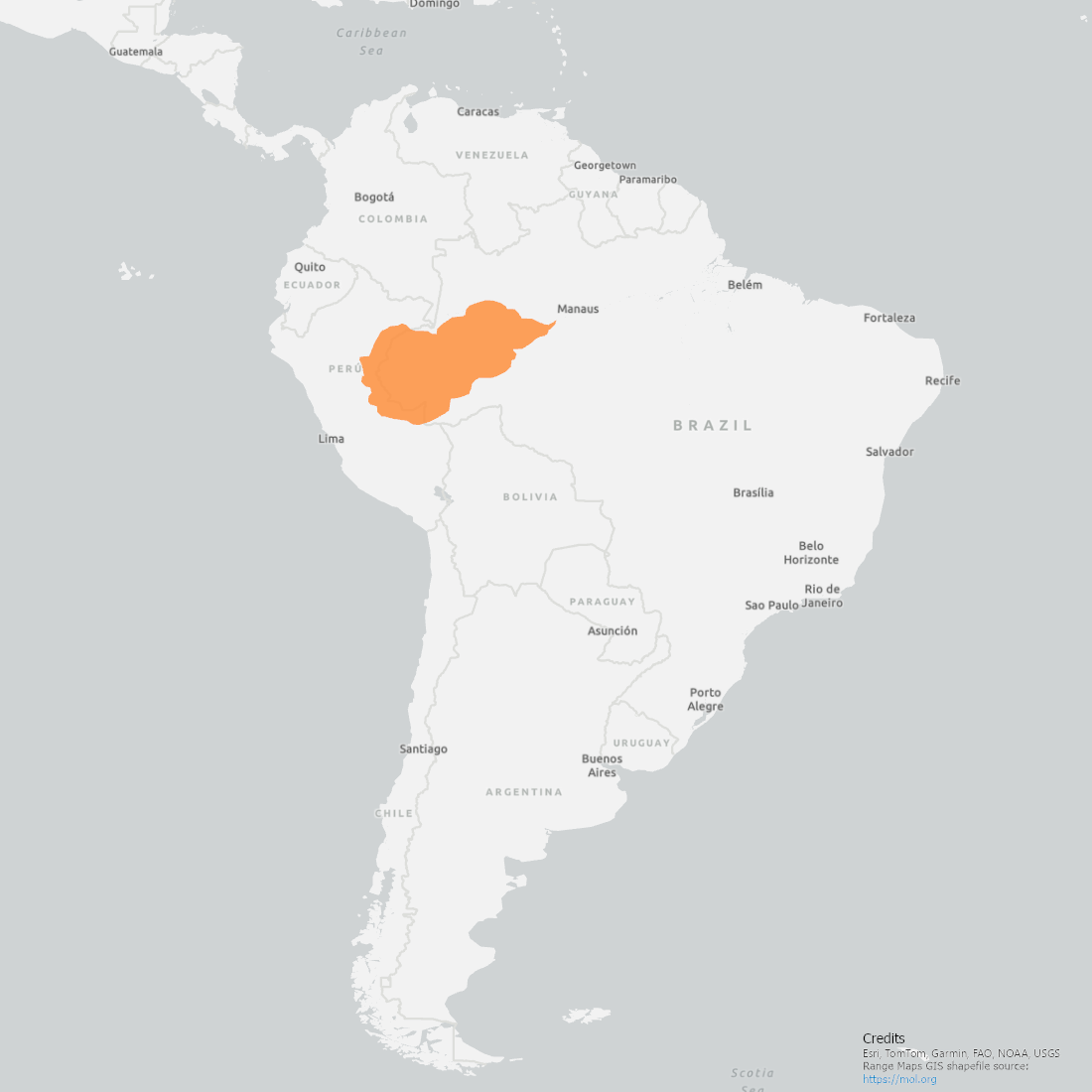
Range map of the Coppery Titi in northern South America between Peru and Brazil

Diet

Like other neotropical primates, Coppery Titis are mainly fruit-eaters (frugivores) and spend almost 75% of their time in search of fruit while up in the trees. They also feed on insects.

Habitat

Coppery Titis are native to Peru and Brazil in South America and are found in dense tropical Amazonian rainforests.

Behavior

Coppery Titis are highly social, living in groups that consist of an adult pair and their young from several generations. They are highly communicative and emit an assortment of vocalizations such as squeaks, trills, whistles, and screams. In the wild, the adult pair are known to duet every morning. Family members are closely bonded and intertwine tails when they rest together. Coppery titis have a highly advanced sense of smell that they use to communicate with family members, especially during breeding season. They scent mark the boundaries of their territories, thus sharing significant information with their family members and with Titis belonging to neighboring family groups. Titis display aggressive behavior by shaking their bodies and heads, lashing their tails, and swaying. Coppery Titis also display anti-predator mobbing behavior where the whole group encircle the predator and alarm call while moving around, shaking their bodies and heads, lashing their tails, and swaying.


Reproduction

Coppery Titis form long term bonds and mating pairs live together with several generations of young. One infant is born every year between November and March. The young are weaned when they are about four months old. Males are the primary caregivers and predominantly take care of the infants. They commence their parental role a few hours after the infant is born, carrying them around and protecting them. The female’s only parental care role is nursing the infant.


Conservation

According to the World Conservation Union, Coppery Titis are only found in a remote region of the Amazonian rainforest that is isolated. As a result, they are not considered to be under any immediate threat.


 

Related
Discover related animals

Find out more about their diets, conservation, and habitats!

animal
Bobcat

Bobcats are one of the largest species of small cats. They are light to dark brown in color with a creamish-white underbelly. They have black outlined, pointy ears, black marked faces, and their legs. Their whisker spots are also black.

See More
animal
Golden Lion Tamarin

Golden Lion Tamarins are small-sized primates that are golden red in color. They sport manes like Lions which gives them their name.

See More
animal
Red Fox

The Red Fox is the largest of the foxes and it belongs to the dog family Canidae. The reddish-brown coloring of their thick fur gives them their name.

See More
Trini laying on rocks.
animal
Snow Leopard

Snow leopards live at high-altitude alpine and sub-alpine mountain ranges of the Himalayas including Nepal, China and Central Asia.

See More