All about the Golden Lion Tamarin...
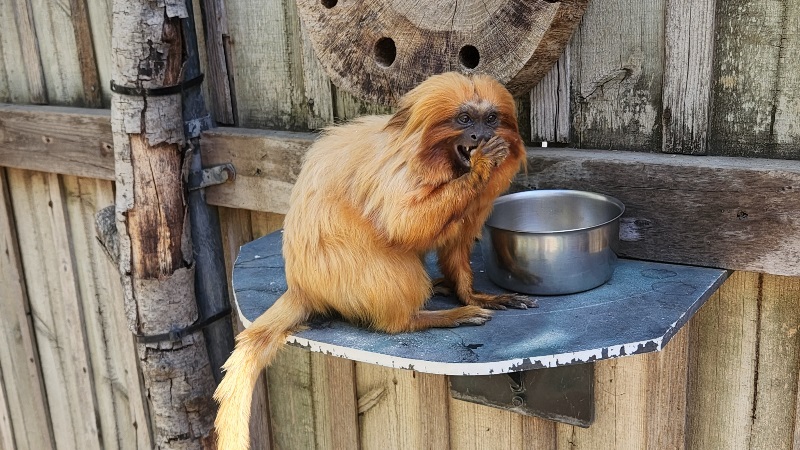
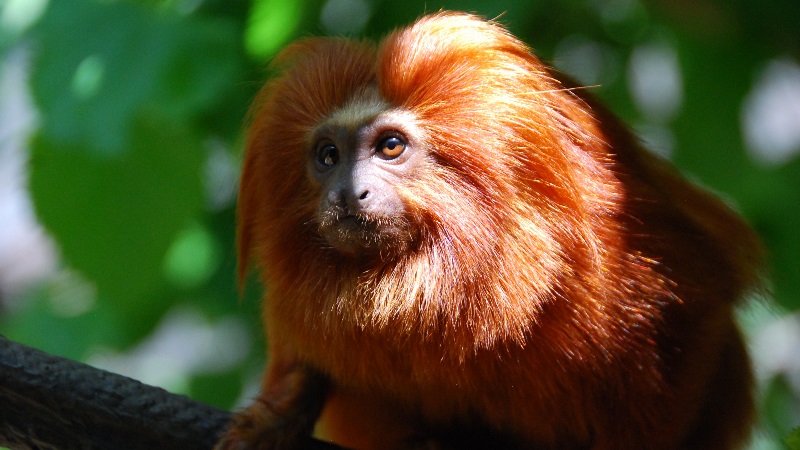
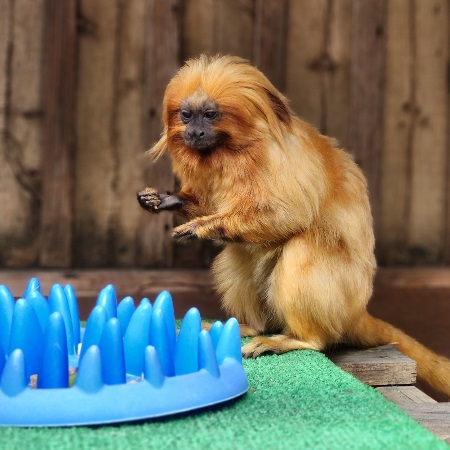
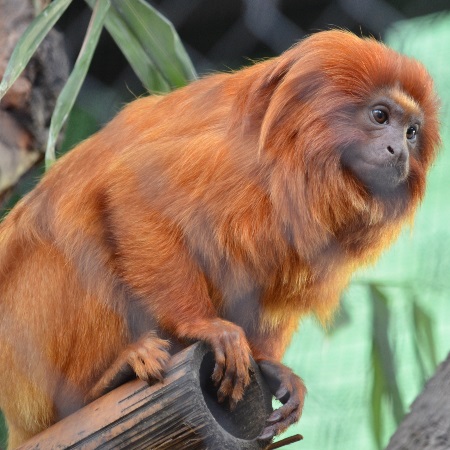
Golden Lion Tamarins are small-sized primates that are golden red in color. They sport manes like Lions which gives them their name. Males and females are similar in size and appearance (monomorphic). Golden Lion Tamarins have long tails that help them balance when they climb into the upper reaches of tree canopies. They are usually less than a foot in size and like other primates, they are active during the day (diurnal). Their predators include snakes, rats, and wild cats. Man, of course, is the greatest threat to these tiny primates.

Diet
They are omnivorous; feeding on fruits, flowers, tree gum, nectar, eggs, insects, small invertebrates, small reptiles, and small birds.
Habitat
Golden lion tamarins live in south-eastern Brazil in the coastal tropical rainforest. They are highly arboreal in nature, predominantly spending time in trees.
Behavior
Golden lion tamarins are highly social spending a considerable time interacting with one another or training their offspring. Like other species of tamarins and marmosets, Golden Lion Tamarins use tree hollows as their sleeping sites. They change their sleeping sites often so that their scent is not concentrated enough to alert predators.
These primates emit various vocalization patterns, including the long call emitted by the breeding pair that helps in pair bonding. The long call also alerts neighboring primate groups of the presence of another group in their territory. When predators are in the vicinity, Golden Lion Tamarins emit alarm calls warning members of their family to protect themselves.
Golden Lion Tamarins use various foraging strategies, including searching for insects behind and in-between tree bark. They use several foraging sites which are often expanded when food resources are scarce. Since nearly 15% of their diet consists of invertebrates, tamarins are known to use their claw-like nails to manipulate leaves, sticks, bark, and leaf litter in search for food.
Reproduction
Golden lion tamarin social groups usually consist of one adult breeding pair. If there are more than one adult male in the breeding group, one of them (usually the dominant male) breeds with females.
Peak breeding season is in spring and offspring are born in fall and winter. Golden lion tamarins usually deliver twins. Infants clutch onto their mothers and nurse for around 3 months and are weaned off soon after. Males sexually mature at 2 years of age while females mature around 1.5 years of age. When the offspring are sexually mature, they disperse from their social group to start their own family.
These tamarins display bi-parental care with males taking care of their offspring and providing females an opportunity to rest and feed. Young tamarins are trained by their parents to display natural species-specific behaviors such as hunting, keeping watch for predators and alerting the family, and most importantly foraging for food resources. They are also trained to be good parents and are often allowed to take care of their younger siblings. Since a greater proportion of their behavioral repertoire is gained through learning, young tamarins must receive such training from their parents in order to survive, breed, and successfully take care of their young.
Conservation
Golden lion tamarins are only found in tropical rainforests that are being decimated for palm oil. Their habitat is now severely fragmented with a continuous decline of
habitat quality and habitat size. Currently, one third of the wild population has originated from the reintroduction of captive individuals. Their forest supports more than 60 percent of the Brazilian population and provides clean drinking water, clean
air, and many other resources.