All about the Southern Pudu...
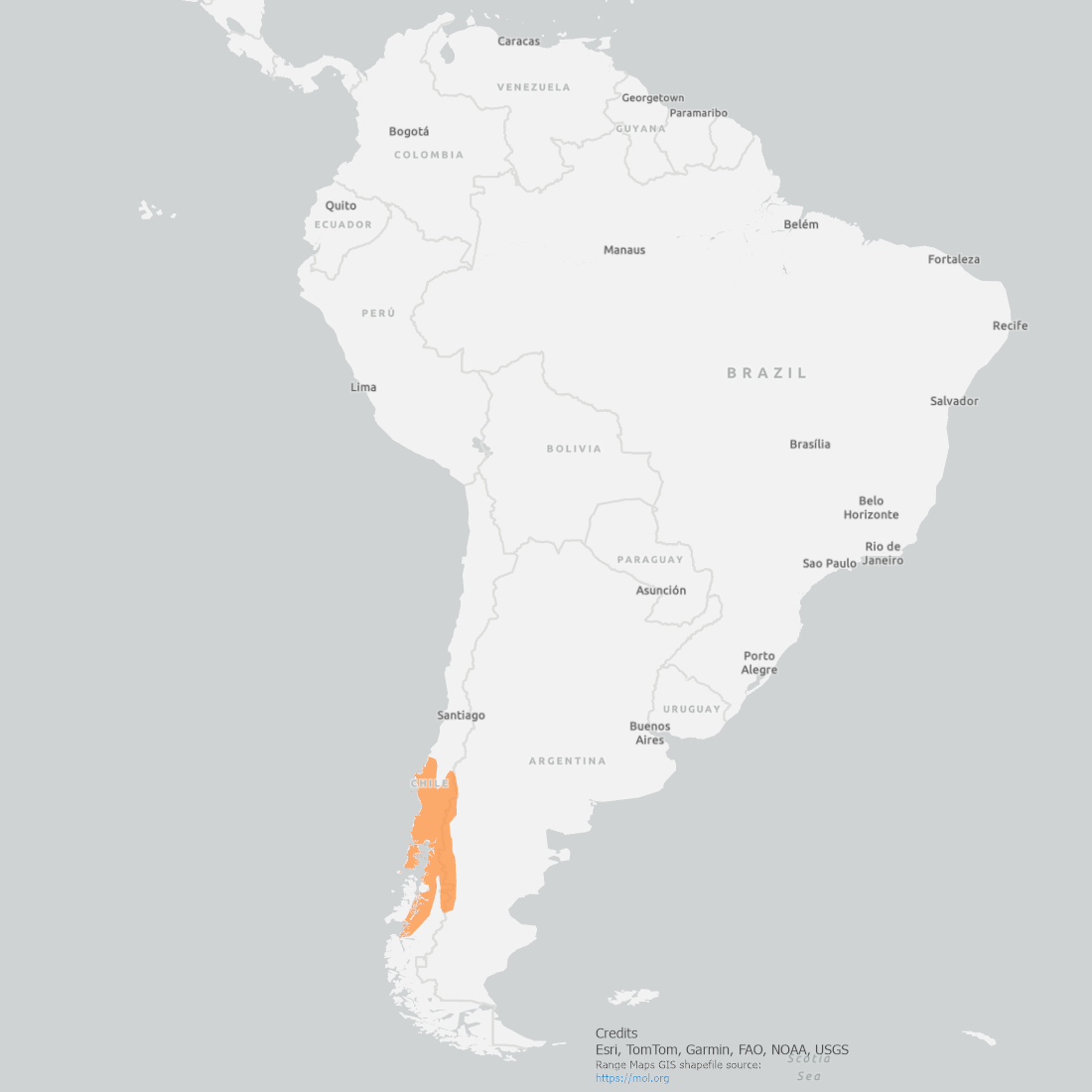
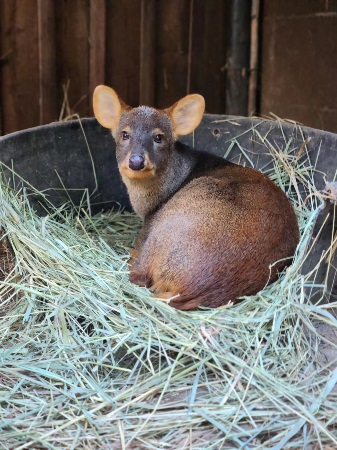
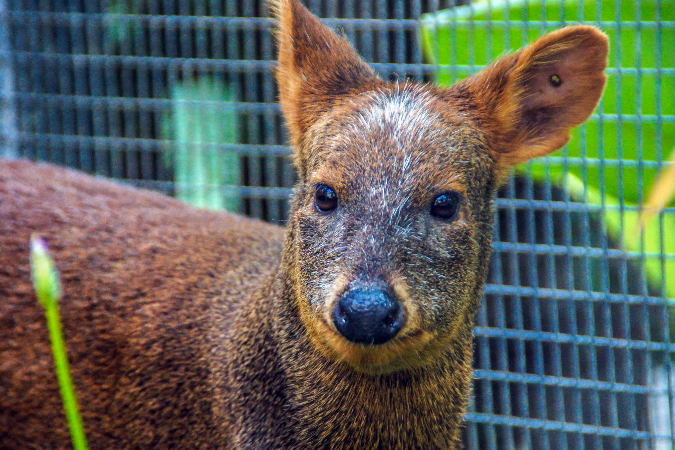
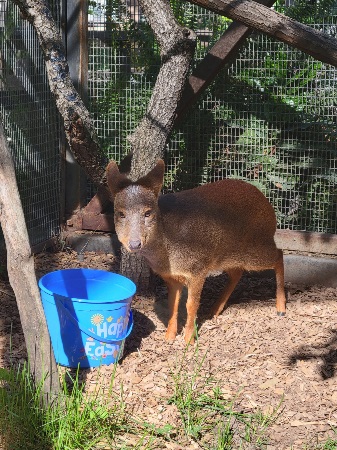
The pudus are considered to be the smallest species of deer in the world and are found in South America - the Northern Pudu in Venezuela, Peru, Colombia, and Ecuador, and the Southern Pudu in Chile and Argentina.
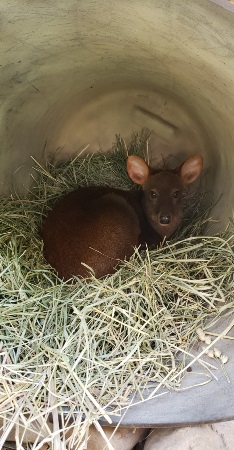
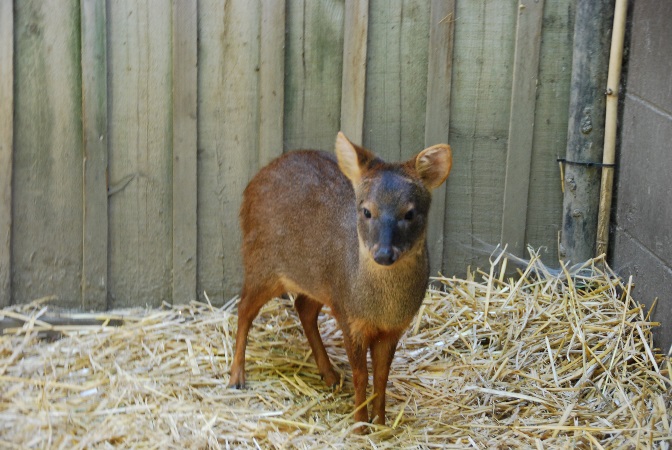
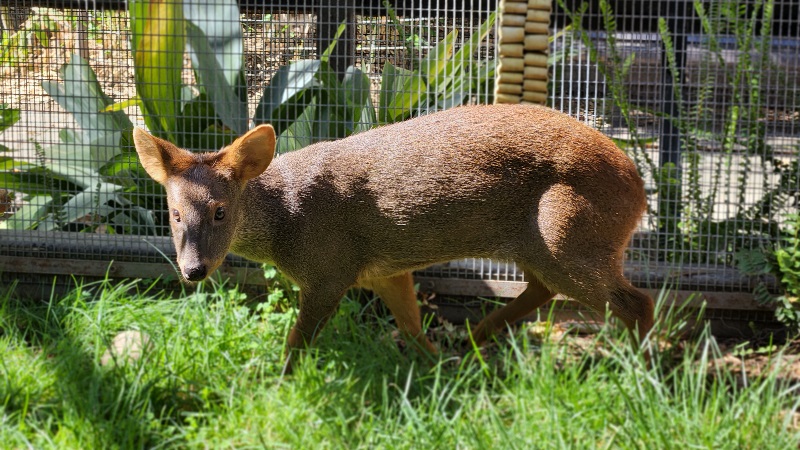
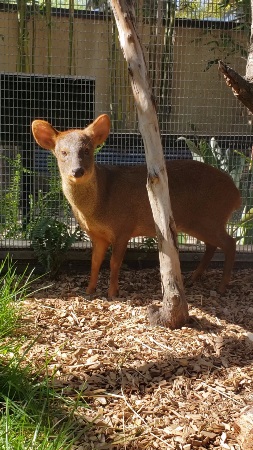
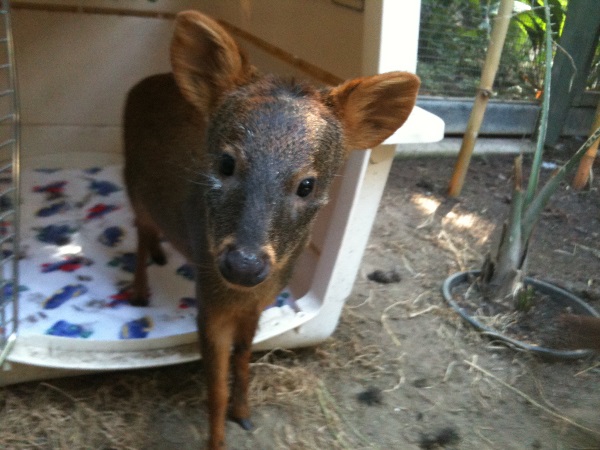
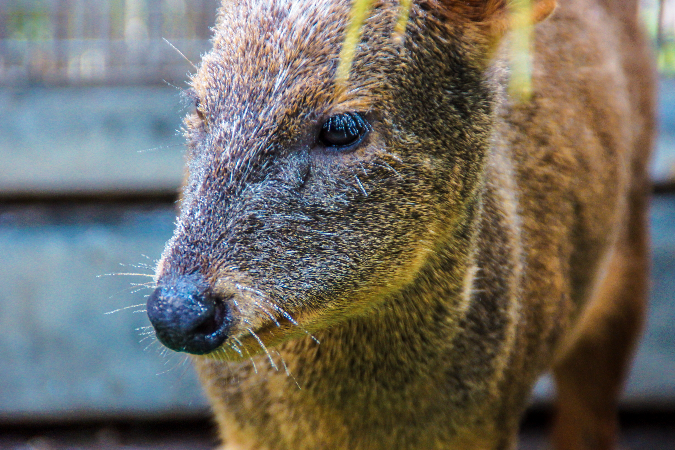
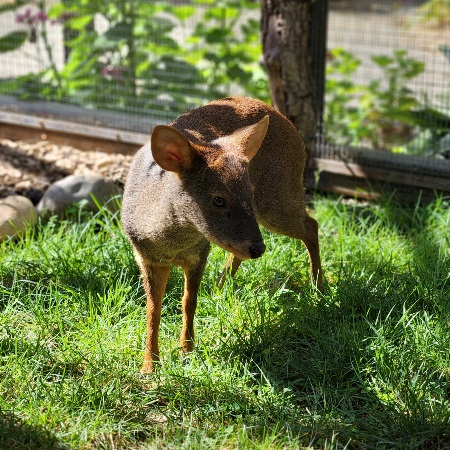
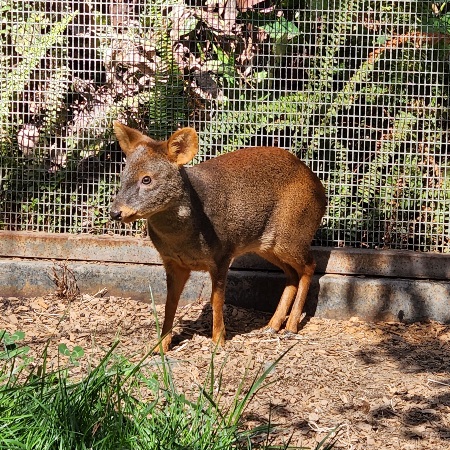
The Southern Pudus are slightly larger in size than the Northern Pudus. Both males and females are about 3 feet long and 1.5 feet tall and weigh between 15 to 30 pounds. Their dark brown color helps them hide from their predators in the wild. Adult males are easily identifiable by their small antlers that look like horns. Compared to other species of deer, pudus have shorter legs and their rumps are not raised.
Diet
Habitat
Southern Pudus inhabit temperate rainforests in the dense bamboo understory of temperate rain forests at 5,500 feet altitude along the coast of southern Chile and southwestern Argentina.
Behavior
Southern Pudus are active by day and rest at night (diurnal). They have an advanced sense of hearing (auditory sense) that helps them closely monitor the presence of predators. They spend a considerable amount of time finding the right kind of food and heavily depend on their sense of smell. They use their teeth to remove bark and tough outer layers before feeding. They also use their legs to break thick stems to reach the pith.
Pudus unlike other deer that live in social groups, are rather unique and lead solitary lives, only pairing up during the breeding season. Both males and females maintain home ranges that range between 40 and 60 acres. They mark their territories by leaving large dung piles near their feeding and resting areas. The dung piles alert other pudus that the territory is inhabited.
Southern Pudus are very territorial and display aggressive behavior toward their competitors when threatened. Similar to other species of deer, pudu males aggressively use their antlers to butt other competing males during the breeding season, stomping and stamping their feet. They display submissive behavior in the presence of a dominant animal by crouching low with their tails drooping down, avoiding eye contact, or lying on the ground.
Reproduction
Southern Pudus are highly elusive animals and there is a dearth of information on their reproductive behavior in the wild. Most of the existing information has been collated from breeding pairs housed in zoos. Southern Pudu bucks breed with several females during the breeding season which depends on where they are located and can stretch from spring and fall. Females deliver 1 (or rarely 2) fawn that is dark brown in color with white spots. Fawns are weaned when they are about 2 months of age. Fawns live with their mothers until they reach sexual maturity between 6 and 18 months of age. Sexually mature young disperse from their mothers to lead solitary lives.
Fawns are trained by their mothers to explore and forage for the appropriate food resources. They also learn ways to detect the presence of predators and how to camouflage and hide. Most importantly, they are taught how to be good parents.
Conservation
Since wild Pudu population numbers are still in decline, the International Union for the Conservation of Nature has categorized them as Near Threatened. Although the wild populations do not live in fragmented habitats, there are several threats to their existence. These include human urbanization, tourism, livestock ranching and agricultural farming, logging, and wood harvesting, and most importantly hunting and trapping. Also, the presence of invasive species has a detrimental effect on the free-ranging population numbers of Southern Pudus. Wastewater from urban areas that are dumped in wildlife parks pollutes their water resources contributing to their decline.