All about the Speckled Pigeon...
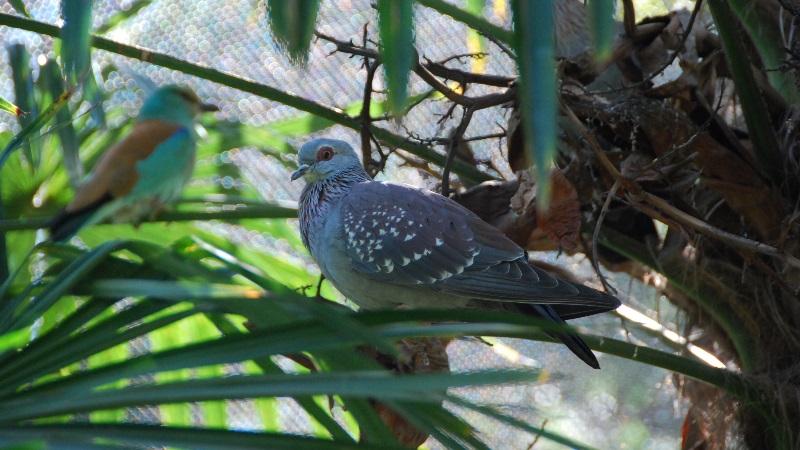
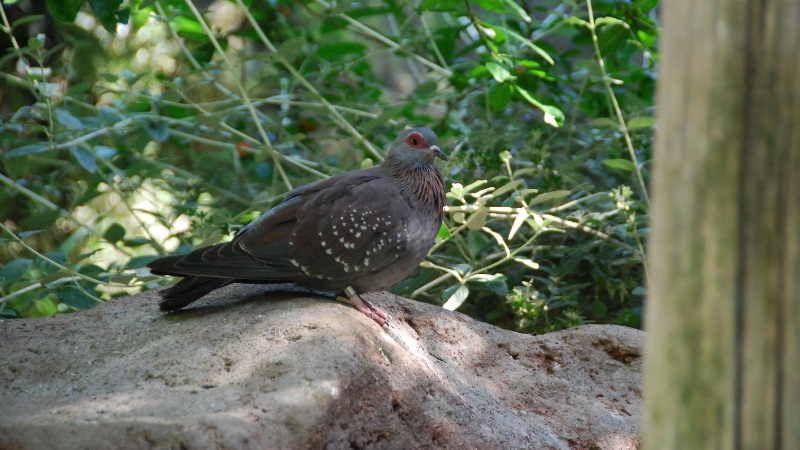
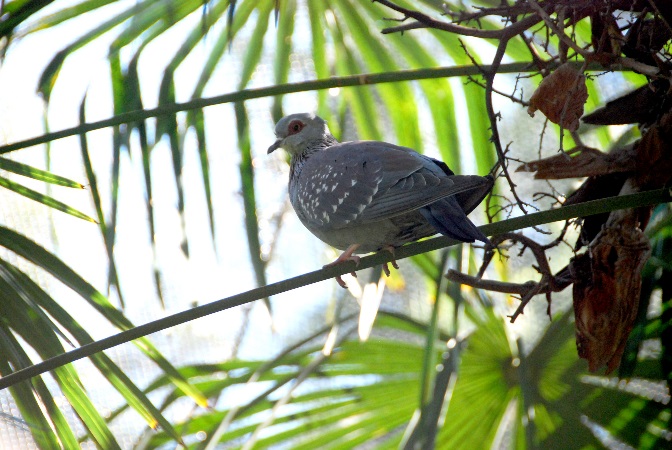
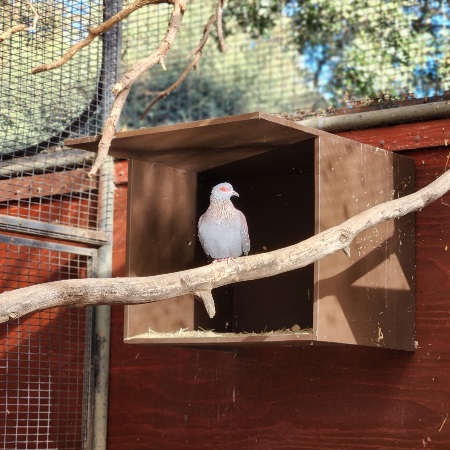
Speckled Pigeons belong to the pigeon and dove family. Both males and females are of the same color, size, shape, and form (monomorphous). Their plumage is slate grey in color with an assortment of colors that include slate grey, reddish-brown, white, and black on their wings and tails. They have black beaks with a white cere. The rest of their necks are speckled with grey and reddish-brown streaks. They have featherless red patches around their eyes. Their legs are pinkish-red. They are a little more than a foot in body length and weigh about half a pound.
Diet
They live in shrublands, grassland, and savanna-type habitats and are mainly granivorous, foraging on the ground and feeding predominantly on seeds.
Habitat
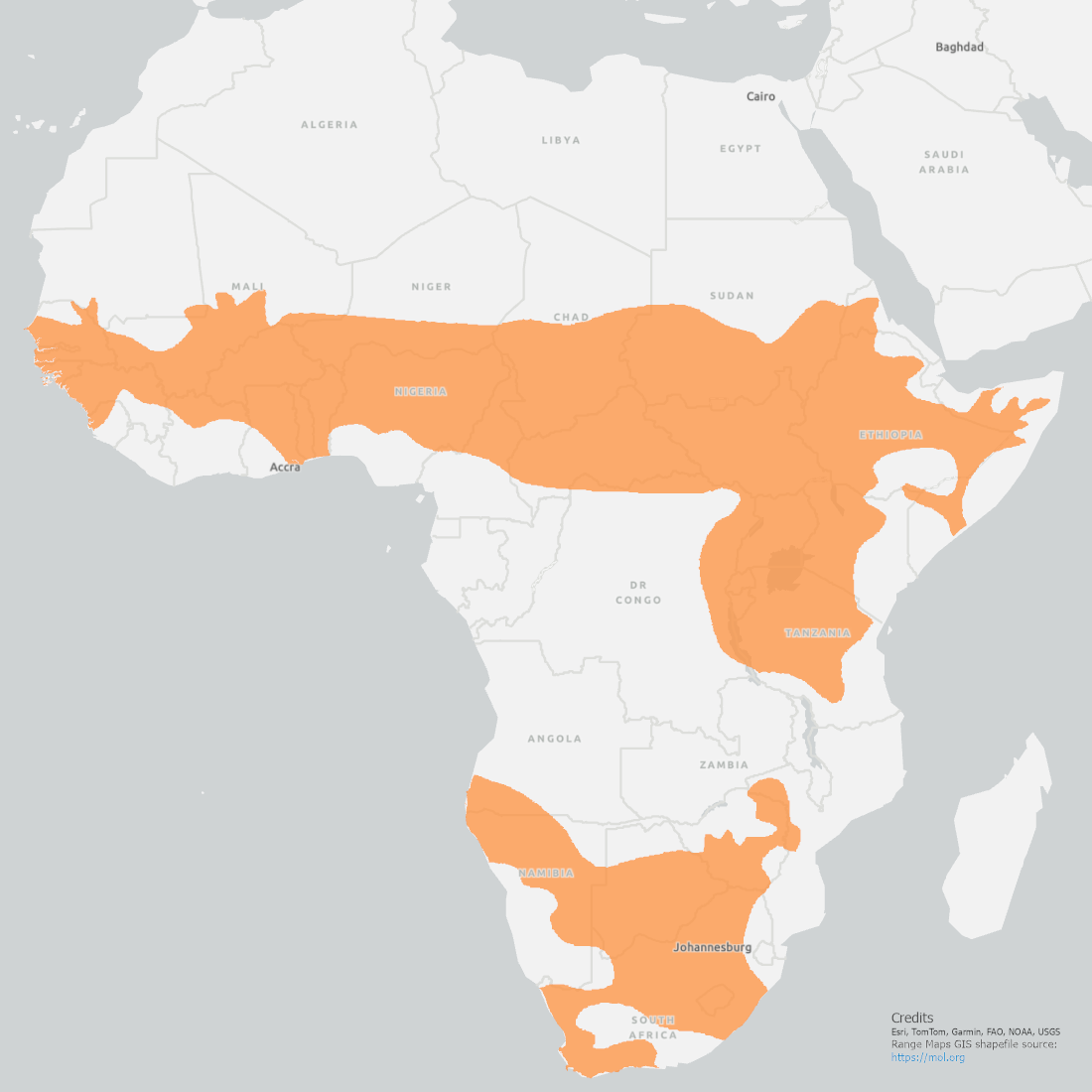
Speckled Pigeons are found in central Africa (Mauritania, Senegal, Mali, Burkina Faso, Niger, Ghana, Benin, Togo, Nigeria, Chad, Cameroon, Central African Republic, Sudan, South Sudan, Ethiopia, Somalia, Uganda, Kenya, Tanzania, Democratic Republic of Congo, Burundi, and Rwanda) and southern Africa (Mozambique, Angola, Zimbabwe, Botswana, Namibia, and South Africa).
Behavior
Being habitat generalists, Speckled Pigeons live in urban environments and agricultural landscapes feeding on seeds, grain, vegetables, and other human leftovers. They have adapted well to urban habitats building nests on apartment buildings and telephone poles.
Reproduction
Speckled Pigeons breed year-round. Their nests are made of twigs, sticks, leaves, and other materials. They exhibit biparental care with both males and females incubating eggs and feeding their squabs (pigeon and dove nestlings that have not learned how to fly are called squabs). Male and female Speckled Pigeons produce a fluid called “crop milk” that they regurgitate to feed their squabs.
Conservation
Since Speckled Pigeon populations in the wild have been estimated to be currently stable, the International Union for World Conservation categorizes them as Least Concern.