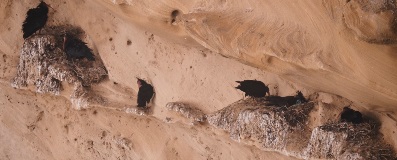
All about the Cape Thick-knee...
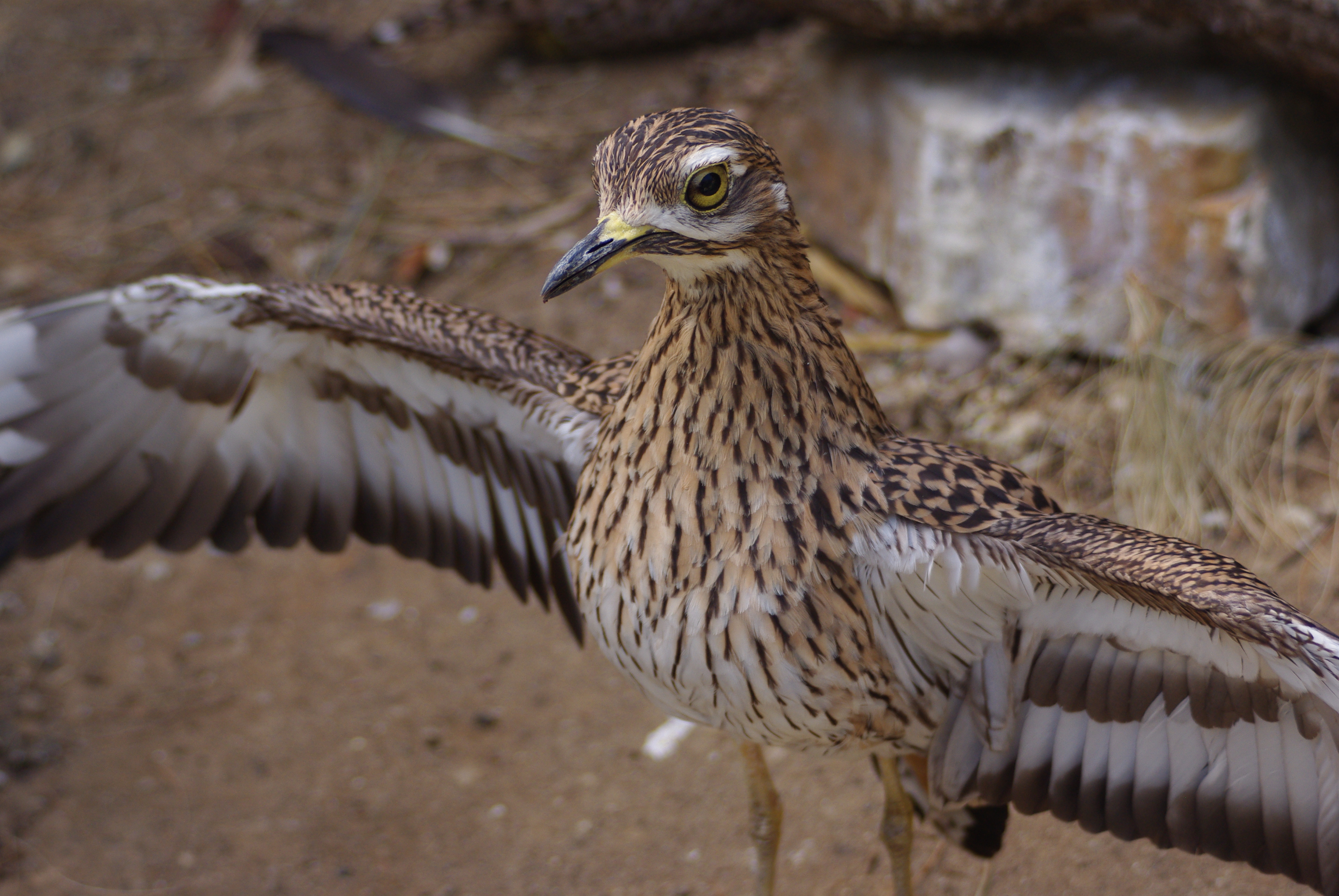
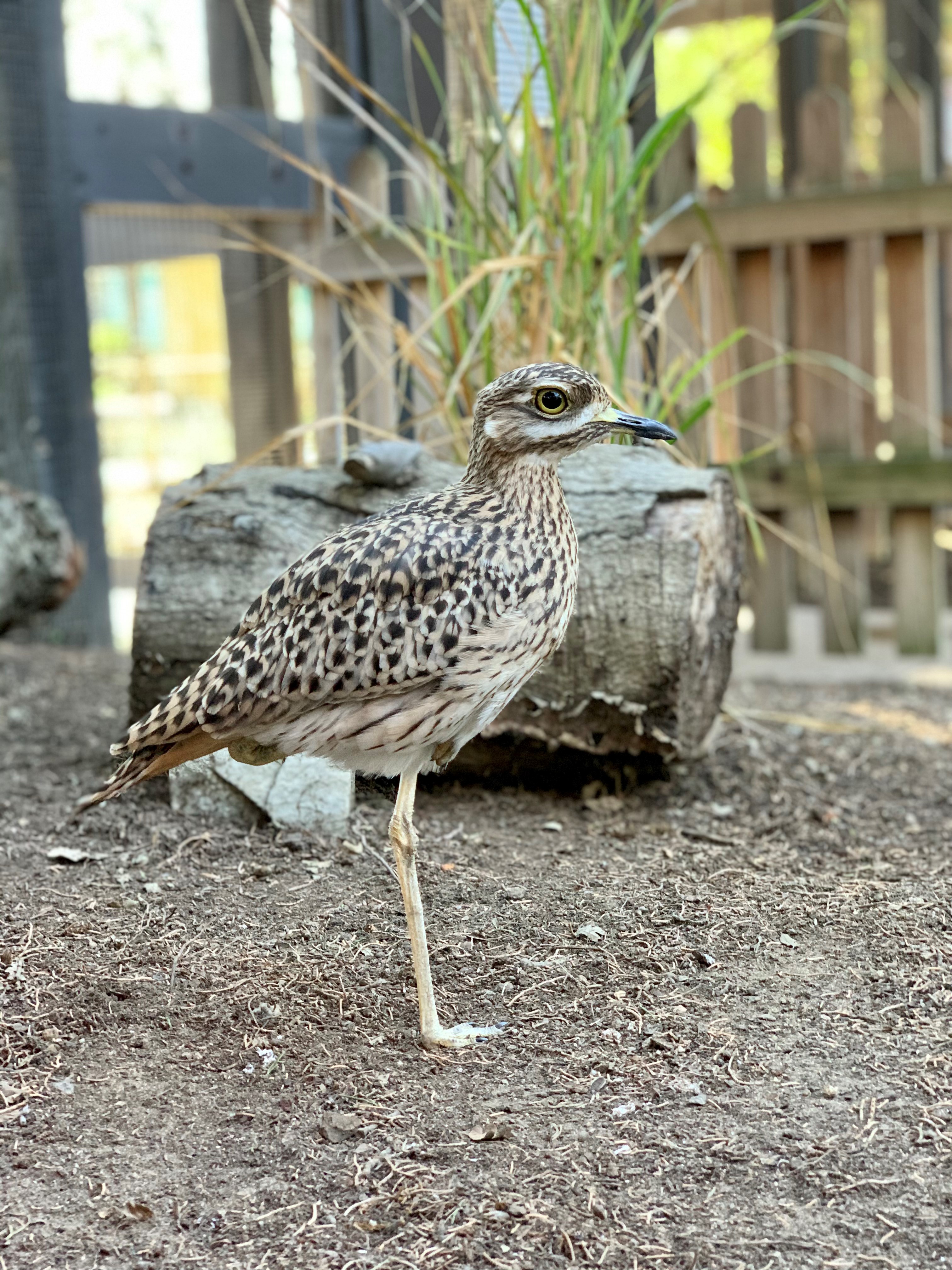
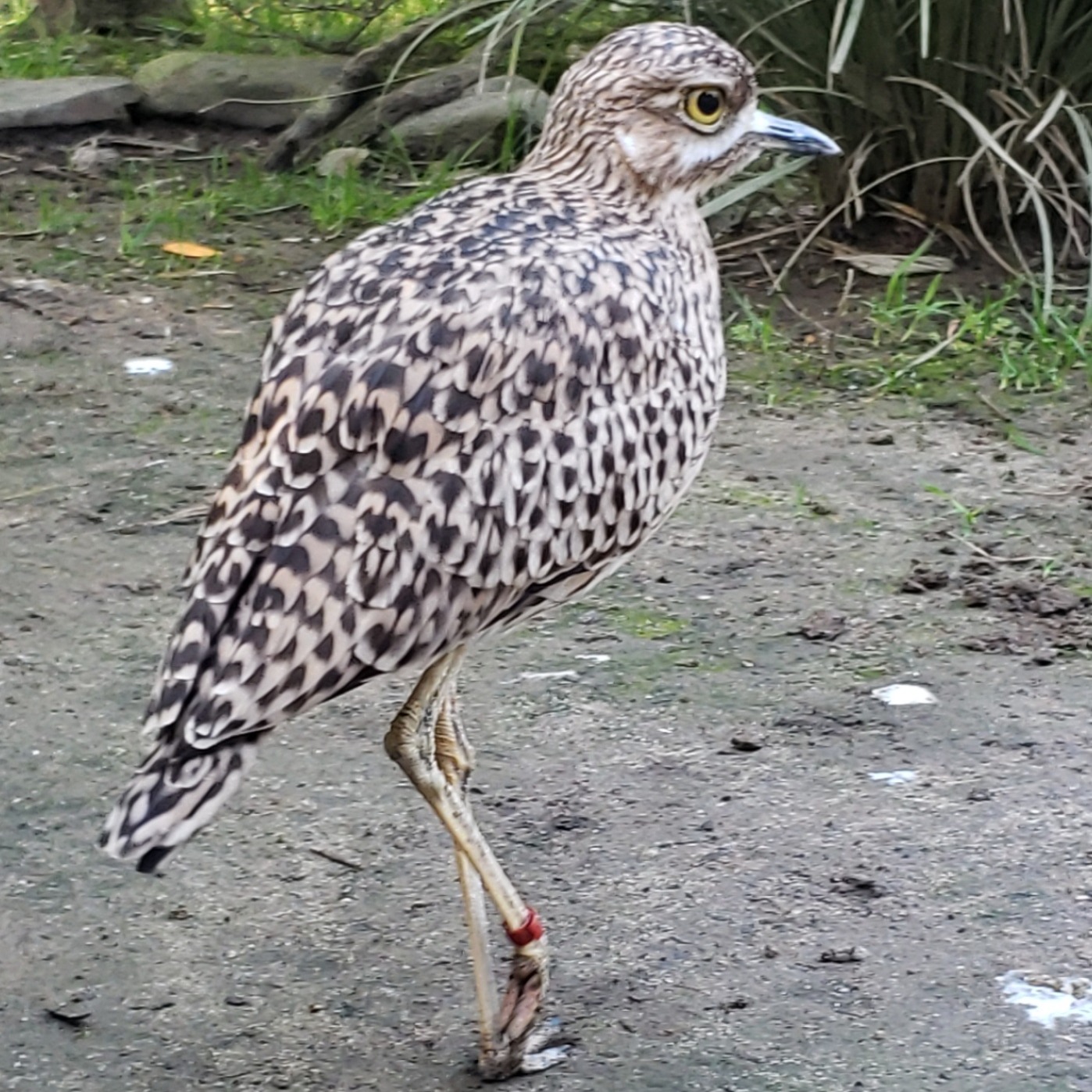
Cape Thick-knees often live near water and are closely related to plovers, sandpipers, gulls, and skimmers. They have long legs and their feathers are speckled with dark brown and white colors. They were named “thick-knee” since their knees are thicker than the rest of their thin legs. Since they are ground-dwelling birds, their colors mimic their surroundings helping them hide from their predators (camouflage). They have yellow-colored pupils and the base of their beaks is also yellow while the rest of the beak is black. They are active by night (nocturnal) and they are known to sit on the ground during the day to hide from their predators. They are approximately a foot in body length and are very light in weight (1 pound).
Diet
They mainly feed on insects and other invertebrates, lizards, and small mammals.
Habitat
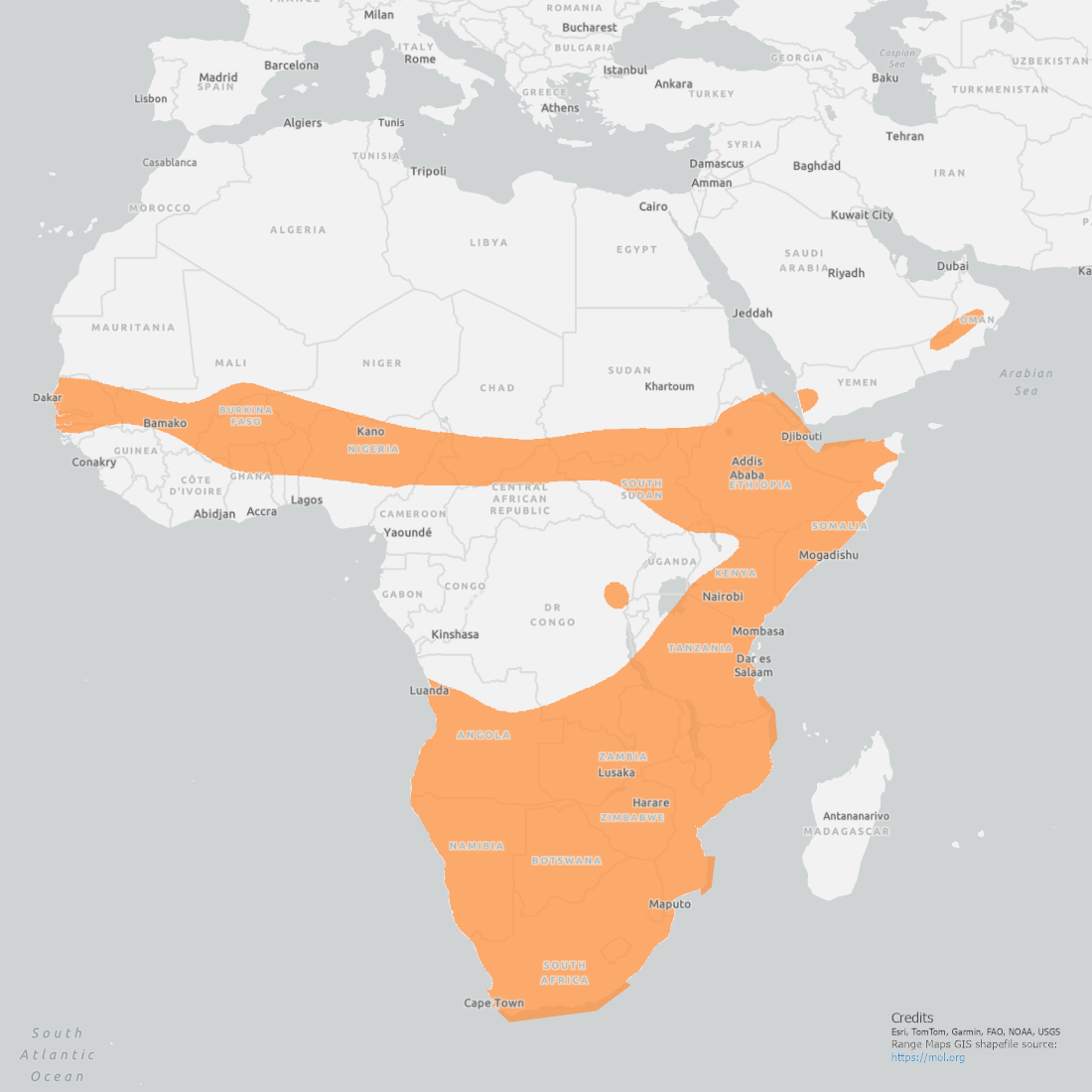
Cape Thick-knees are found in central Africa (Mauritania, Senegal, Mali, Burkina, Niger, Ghana, Benin, Togo, Nigeria, Chad, Cameroon, Central African Republic, Sudan, South Sudan, Ethiopia, Somalia, Kenya, Tanzania, and west Yemen) and southern Africa (Mozambique, Malawi, Zambia, Angola, Democratic Republic of Congo, Rwanda, Burundi, Zimbabwe, Botswana, Namibia, and South Africa). They are found in grassland and savanna-type habitats.
Behavior
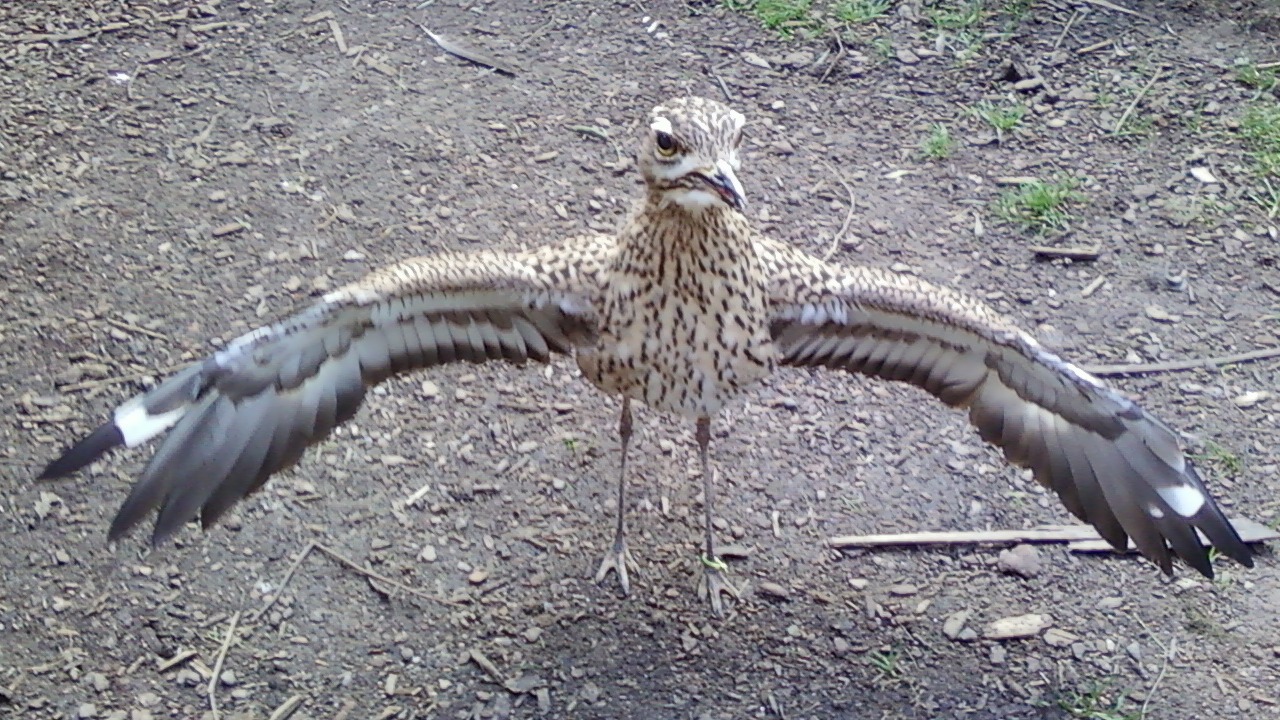
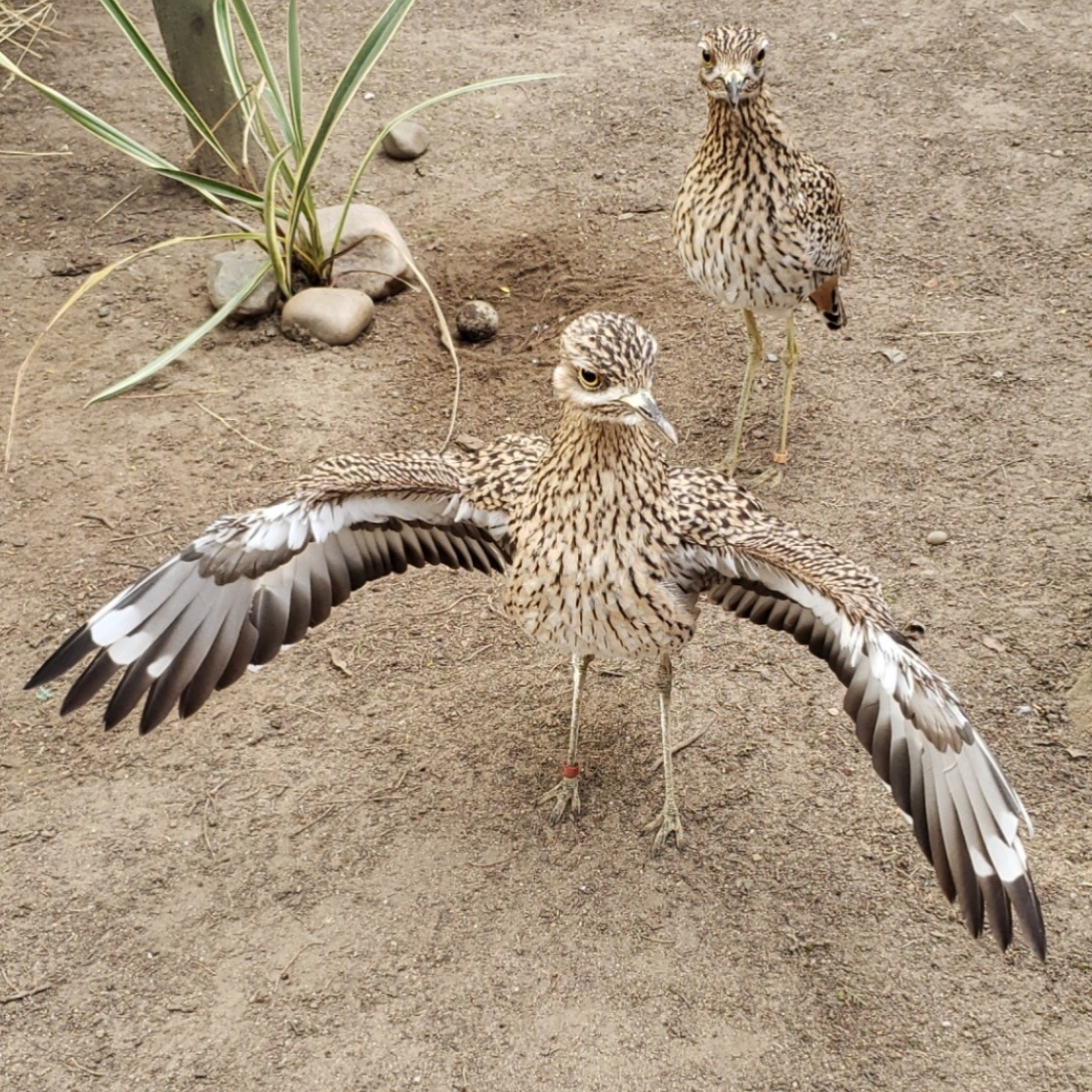
Cape Thick-knees are protective of their nests, eggs, and chicks and they stand guard of their nests. They spread their wings holding their tails erect and sometimes emit a loud and shrill vocalization to deter their predators from their nests. They have also been observed to act as if they are wounded to distract their predators from the nest.
Reproduction
These Thick-knees breed once a year and they nest solitarily. Their nests are shallow indentations in the ground that are often made with twigs, pebbles, leaves, and feathers. The eggs are speckled with white and dark brown helping them camouflage from predators. They are monogamous with the females selecting single male partners that they pair and breed with for life. Both males and females incubate eggs and feed their chicks (biparental care).
Conservation
Since the Cape Thick-knee populations in the wild have been estimated to be currently stable, they are categorized as Least Concern by the International Union for World Conservation.