All about the yellow bellied slider turtles...
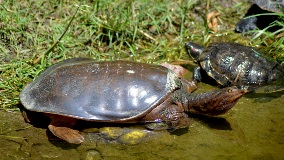
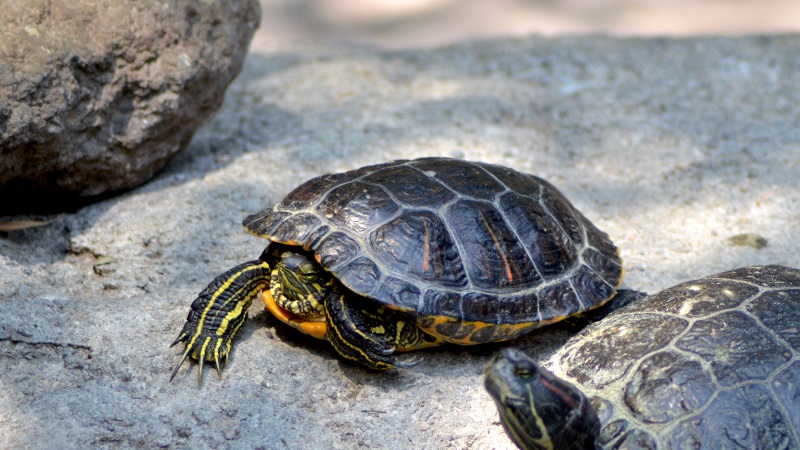
Yellow-bellied Sliders are medium-sized turtles. Like tortoises, these turtles have smooth shells, but of a sleeker build, that protects them from predators. Since turtles spend a considerable portion of their time swimming, their sleeker bodies help them swim more efficiently. Their carapaces, legs, and necks, are dark brown or black in color with yellow striations. Their plastrons are pale yellow in color with either dark brown or black blotches. They are closely related to Red-eared sliders. While the Red-eared sliders have brilliant red lines running from their eyes tapering toward their necks, giving them their name, Yellow-bellied Sliders have bright yellow splotches on the side of the head. Similar to other sliders, they have blunt heads and well-developed legs. Although males and females are almost similar in shape, size, and form, females tend to be slightly larger than males. Males have longer claws than females which they use to hold onto the female during mating. Also, males have concave plastrons while those of the females are flat. Both male and female carapaces are usually a foot and a half in length and they can weigh between two and a half to three pounds.
Diet
While juvenile Yellow-bellied Sliders are carnivorous mostly feeding on aquatic insects and other invertebrates, the adults are omnivorous also feeding on several types of aquatic vegetation, flowers, seeds, and leaves.
Habitat
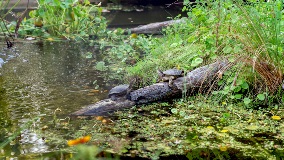
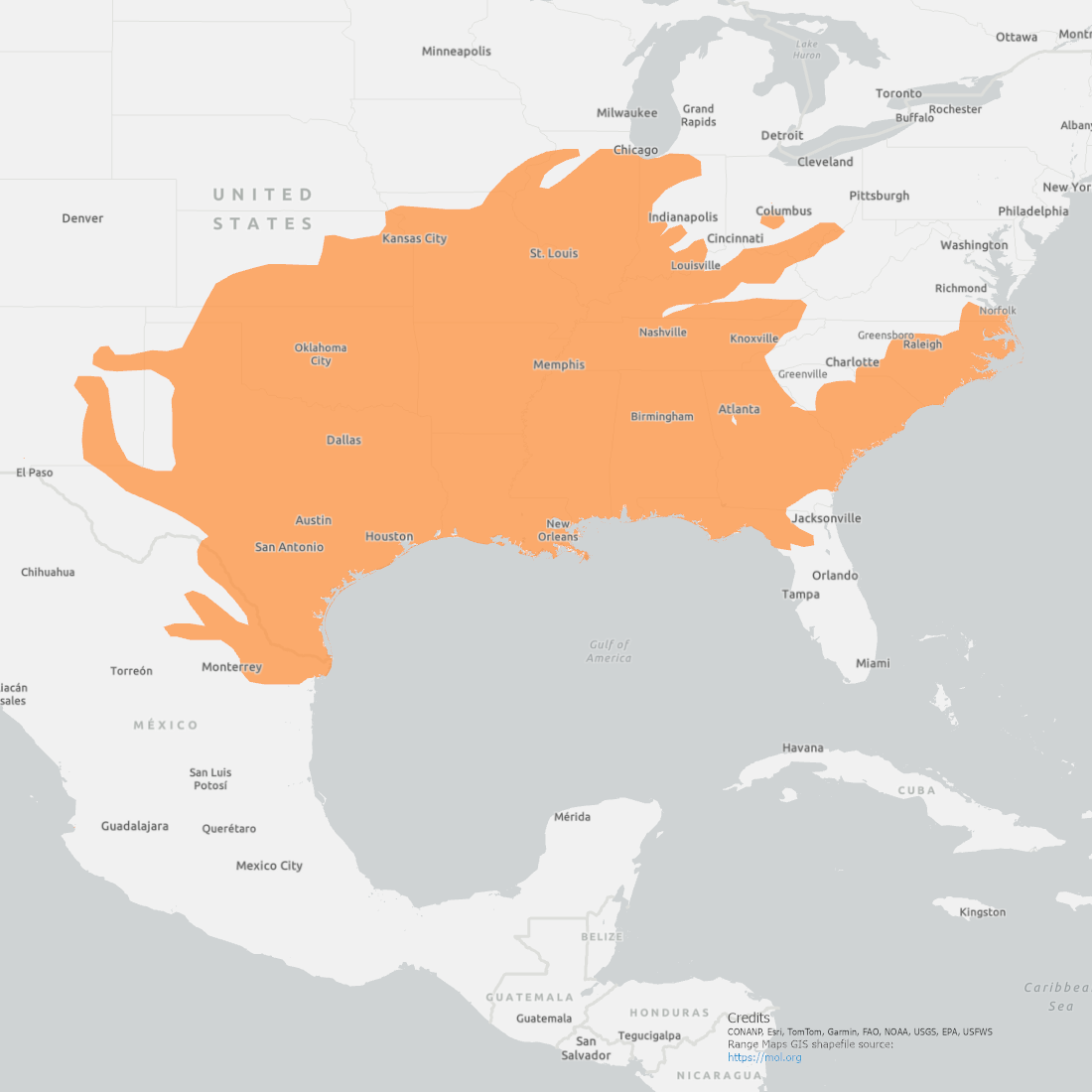
Yellow-bellied Sliders are endemic to North America and are mostly found in northern Mexico and the south-eastern United States (Mississippi, Alabama, Georgia, Tennessee, South Carolina, North Carolina, Virginia, and Florida). They live in freshwater and brackish water habitats that include rivers, streams, lakes, marshlands, swamps, and ponds.
Reproduction
Like other reptiles (and unlike mammals), Yellow-bellied Sliders cannot thermoregulate. In the cold winter months, these turtles sink to the bottom of the water bodies they live in and slow down their activity levels to become almost dormant. This behavior is called brumation. When the climate starts warming up in spring, they emerge to bask in the sun.Breeding in Yellow-bellied Sliders takes place from spring to summer. The male exhibits distinctive courtship displays unique to this species and is observed frequently chasing females. Like Red-eared Sliders, they constantly move their fore-claws in order to attract females. While mating takes place in the water, the females come ashore to dig nests to lay their eggs. They are known to lay around two to 20 eggs per clutch in a breeding season. Parents do not incubate or care for their young and hatchlings are independent from the time they have hatched heading directly toward a water body where they are lesser likely to be predated upon. While males sexually mature from two to five years of age, it takes a few more years for females to mature (between five to eight years of age).
Conservation
Since Yellow-bellied Sliders populations in the wild are estimated to be currently stable, they are categorized as Least Concern by the International Union for World Conservation. However, these turtles are very popular as pets and large numbers of turtles are abandoned by their owners in local water bodies when they are unable to continue taking care of them. Although the species is not native to California, Yellow-bellied Sliders have been widely introduced into native habitats within the state and compete with native threatened wildlife (for example western pond turtles) for their homes and food resources. The federal government in the U.S. has banned the sale of fertile turtle eggs and small turtles as a precautionary measure following incidents of turtle pet owners contracting salmonella from their pets.