All about the inland bearded dragon...
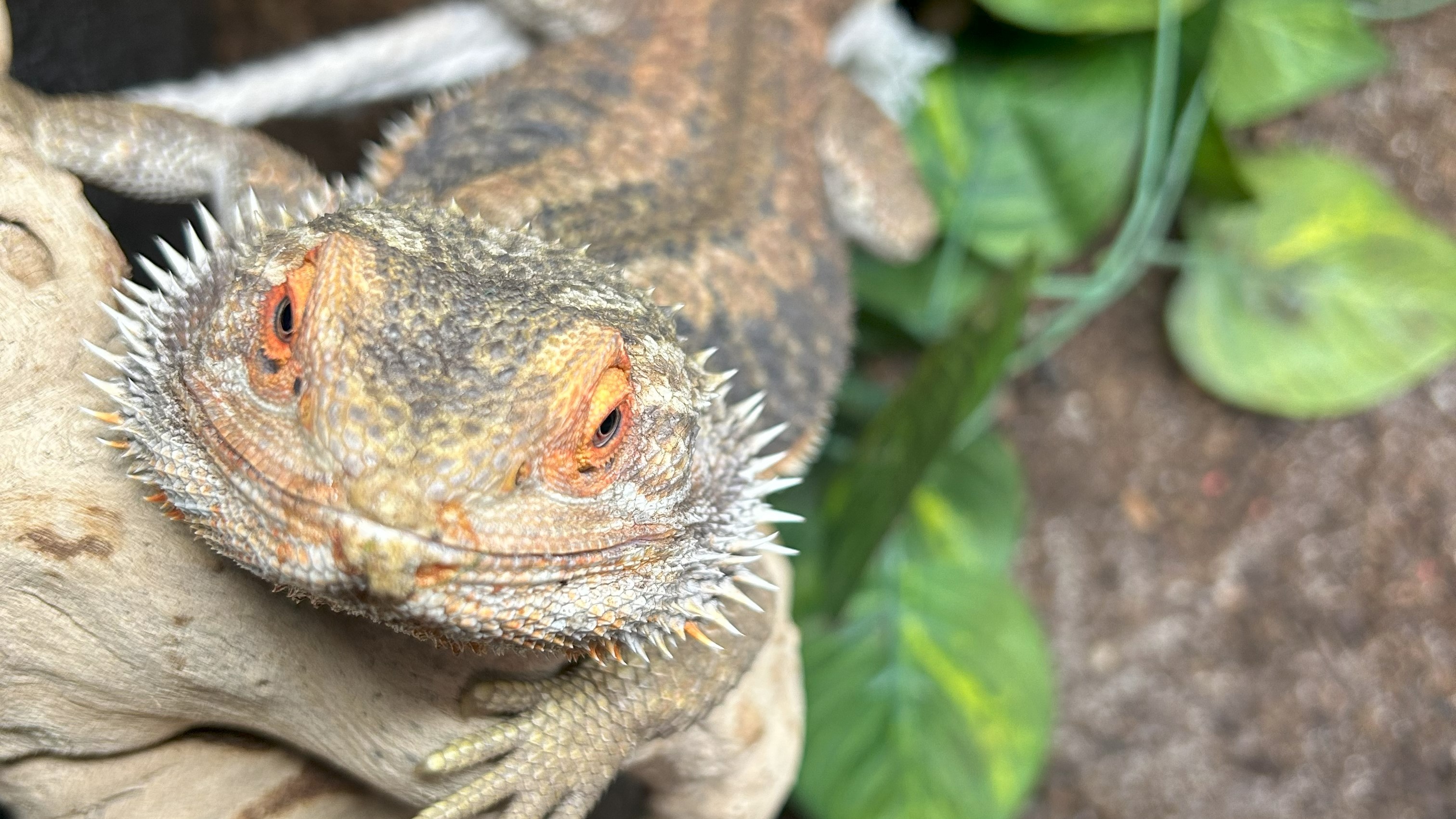
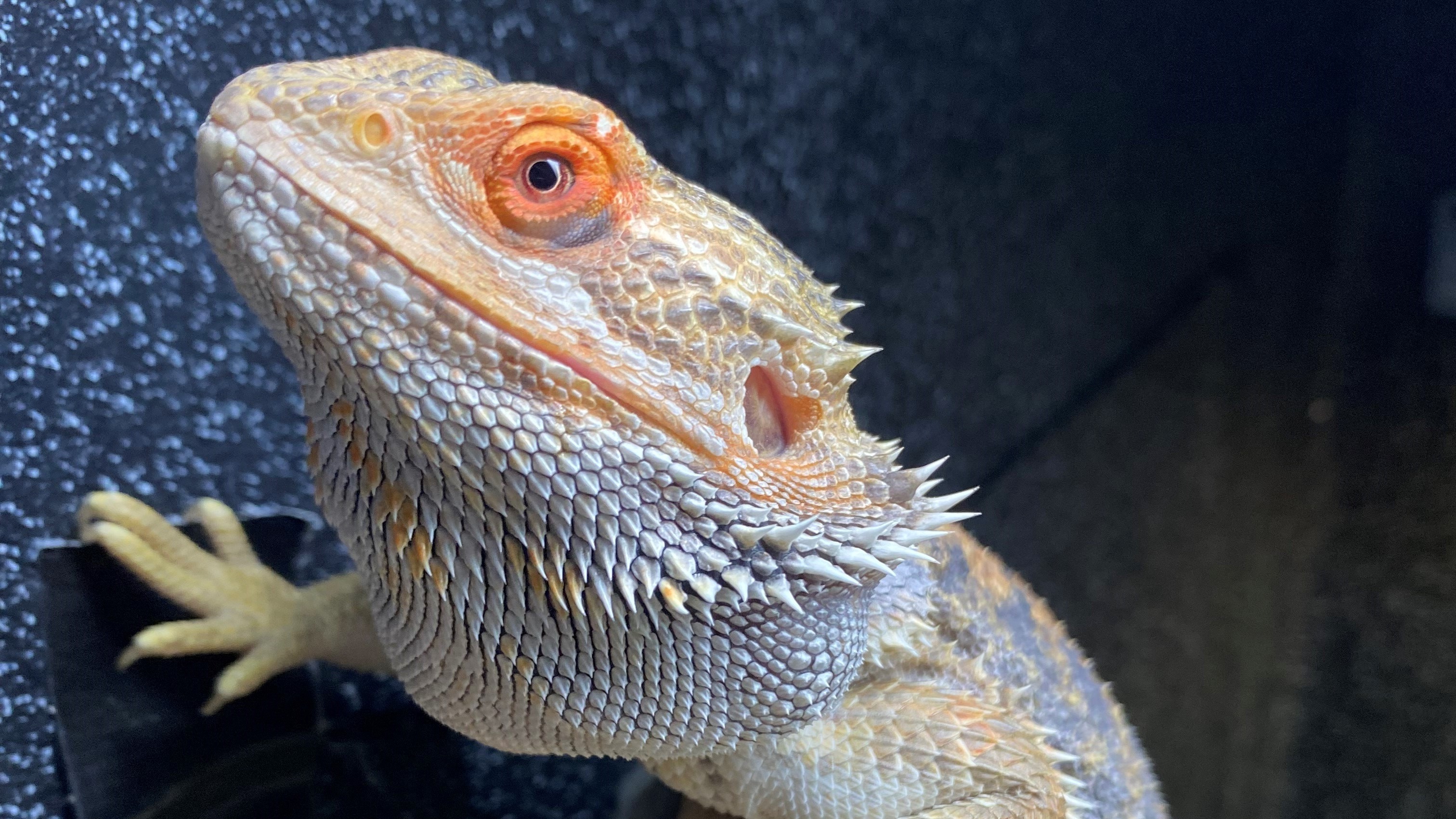
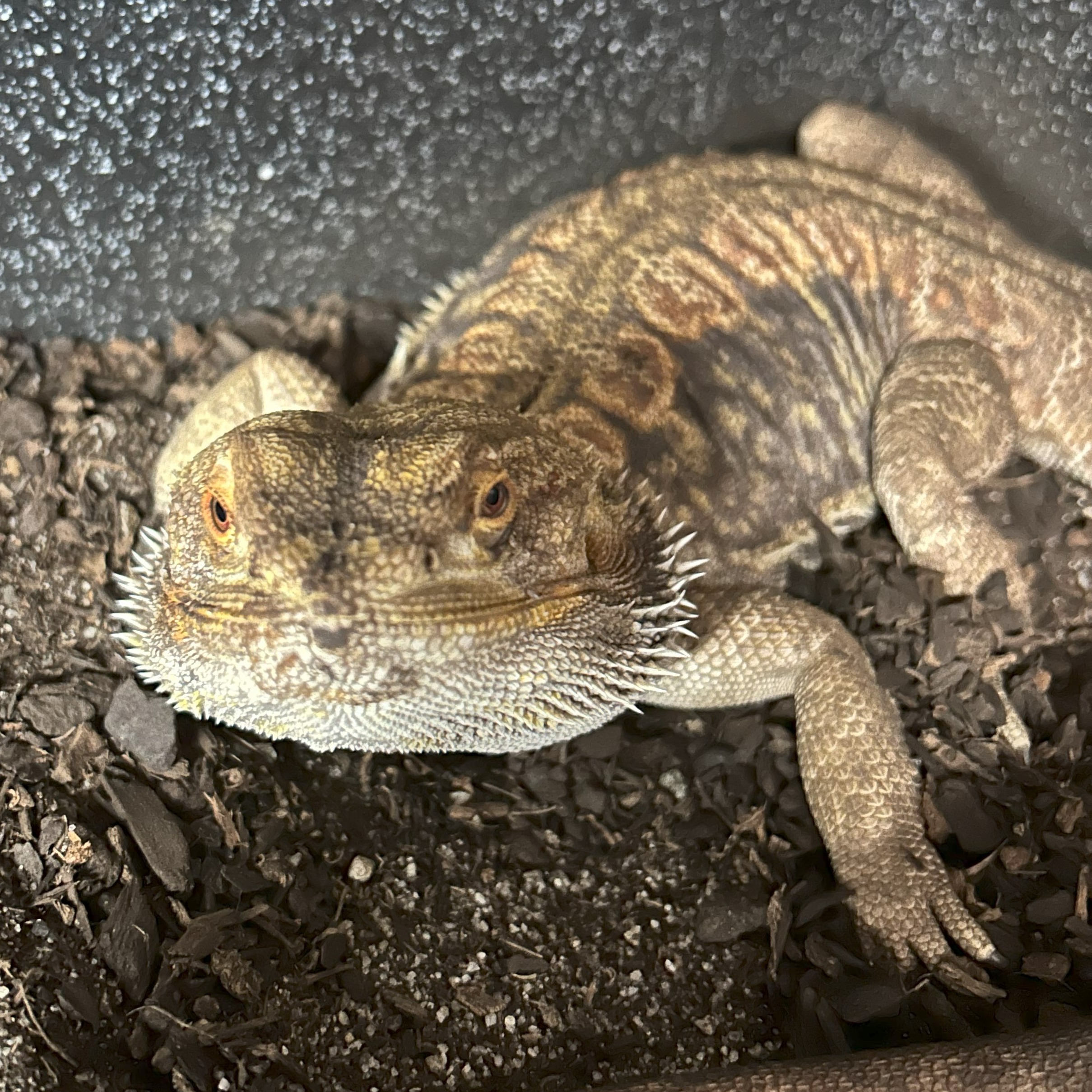
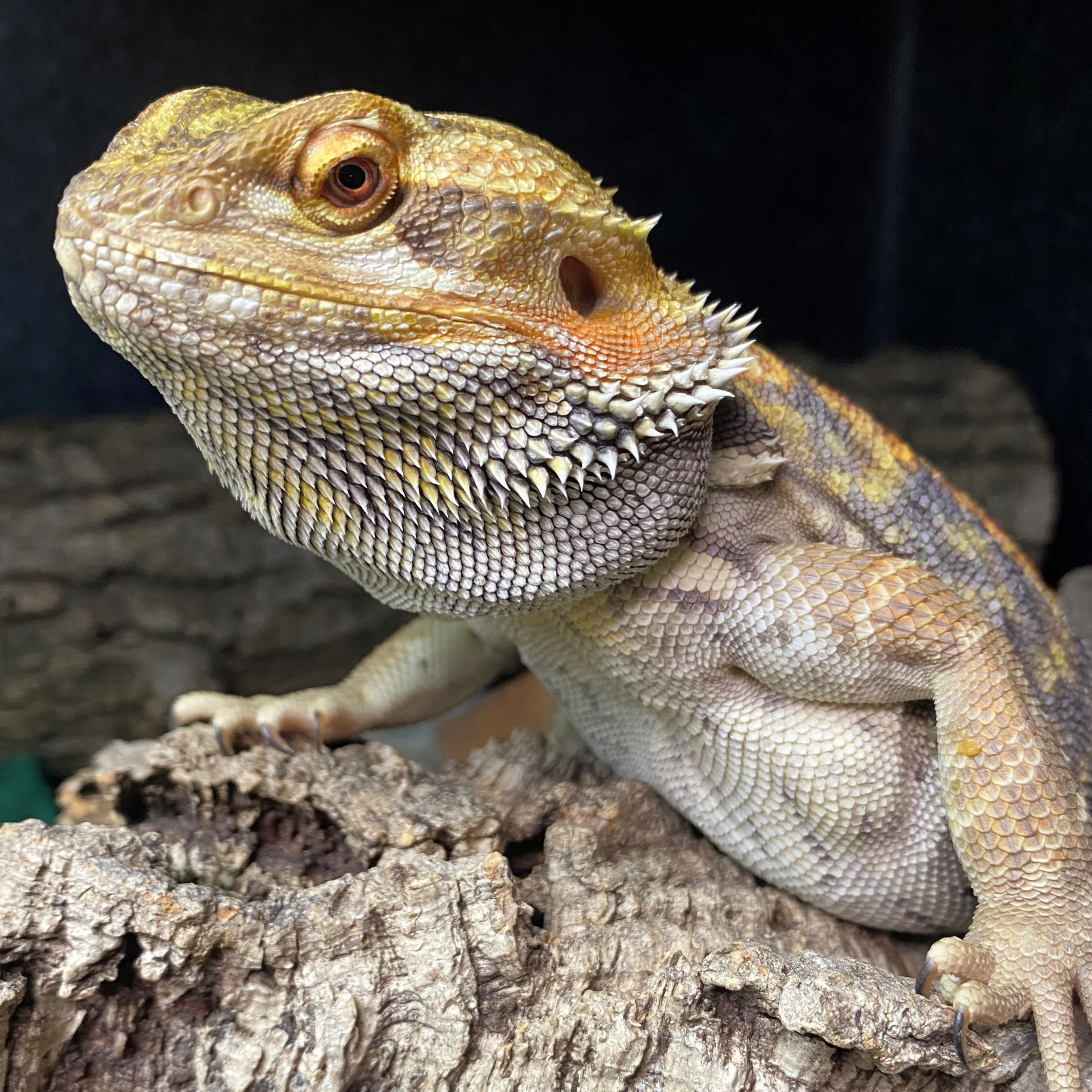
Inland Bearded Dragons are diversely variable in their coloration ranging between different shades of white, cream, yellow, and brown. Sexual dimorphism, where males are different from females, does occur in this species. Males sport larger and more triangular heads, more developed beards and guttural throat pouches, and have wider tail bases. Adult bearded dragons are about 24 inches in length.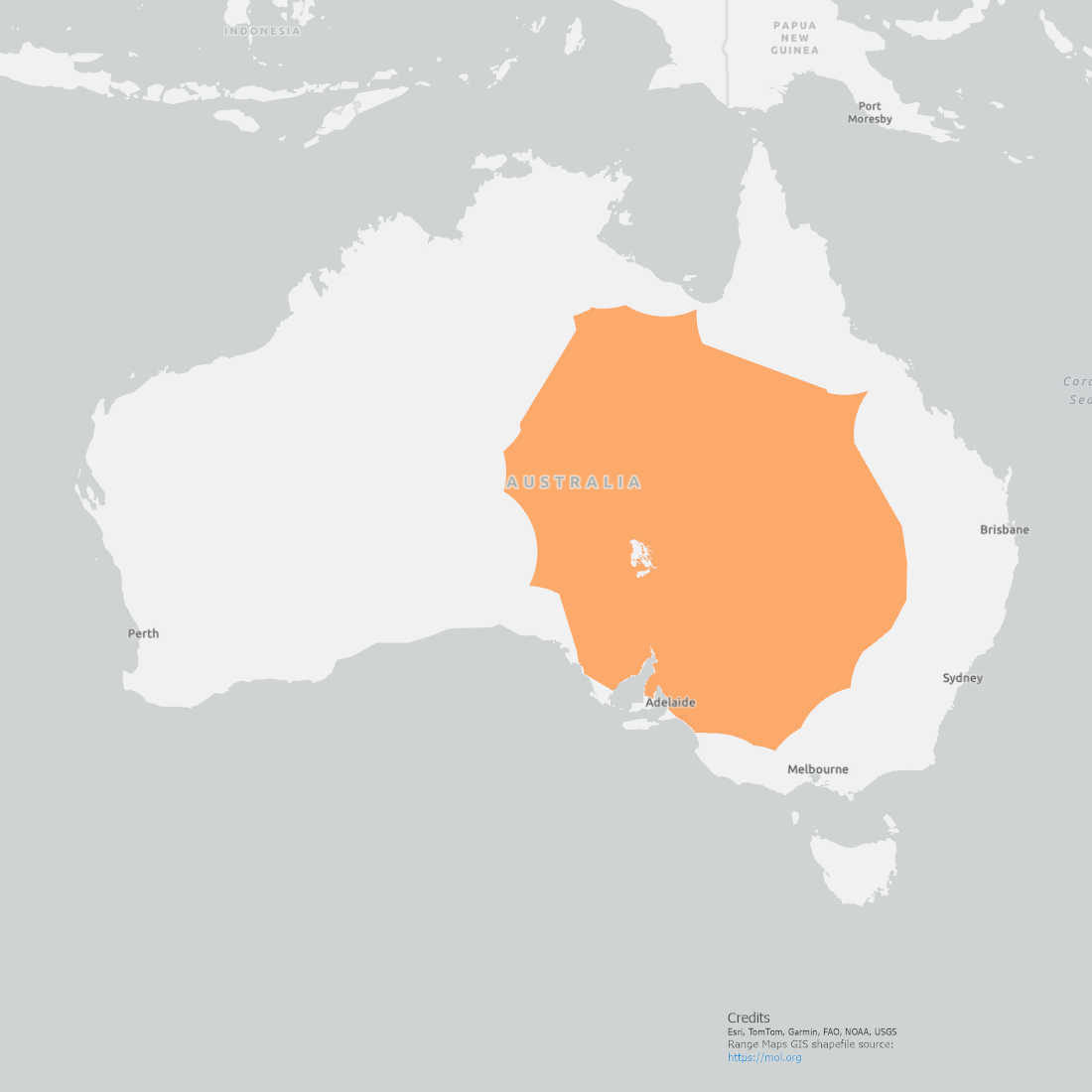
Diet
They are habitat generalists and are opportunist omnivores feeding on insects, plant matter, and small mammals. They are not picky eaters.
Habitat
Inland Bearded Dragons are endemic to arid woodland habitats in eastern and central Australia.
Behavior
Inland Bearded Dragons, like chameleons, can modulate coloring with changing moods. While defending themselves from predators, they flatten their bodies and open their mouths, puffing up their guttural pouches with beards stretched outward. The defensive mood influences a change in the color of the guttural pouches, which darken. The guttural pouches of the males also darken during the breeding season, becoming almost black during their courtship displays.
Inland Bearded Dragons do not vocalize but make soft hissing sounds when attacked. Their modes of communication are through the changing of skin color, and exhibiting a selection of postures and/or physical gestures. They bob their heads or wave their arms to interact with more dominant Bearded Dragons.
Reproduction
They reach sexual maturity between one to two years of age. Males tend to be more aggressive during the breeding season and compete with other males for females. Breeding takes place during spring and summer, which in Australia is between September and March. Females dig burrows in which they lay clutches of eggs. Each clutch contains 24 eggs and each female can lay up to nine clutches a year.
Conservation
Since the giant Inland Bearded Dragon populations in the
wild have been estimated to be currently stable, they are
categorized as Least Concern by the International Union for World
Conservation.